


Finding a strong AI model won’t be the biggest challenge in 2026 because they are ubiquitous. The “franken-stack” that most businesses have unintentionally created, a disorganized network of disparate APIs, specialized vector databases, and stand-alone monitoring systems that simply don’t communicate with one another, is the true pain point.

Despite massive investment, only 5% of companies are achieving “substantial value” from AI at scale, largely due to fragmented infrastructure. (Source: BCG “The Widening AI Value Gap” 2025)

If every new feature requires a mountain of “glue code” and three weeks of integration, your scaling attempts are destined to fail from the outset. The aim of unifying into one seamless platform is to remove the obstacles that hinder advancement, not just to tidy up your tech collection. To deploy autonomous agents and custom processes at the speed the market demands, you need to cease juggling numerous separate vendors and begin functioning as a unified, cohesive entity.

Why Should You Consolidate Your AI Tools for Faster Scaling?

This post will explain why the only way to outperform the competition is to consolidate your stack. We’ll look at how a single platform reduces deployment times, removes technical friction, and gives your AI agents the stable foundation they need to grow in 2026.


Why do Companies Accumulate too many Tools?

Rarely do businesses want to create an overburdened or disorganized AI ecosystem. Rather, the buildup of tools occurs gradually. Before anybody knows it, the company is juggling six overlapping systems: IT purchases an automation platform, marketing brings in a content generator, and a data team adopts a model monitoring tool. While each tool completes a little portion of the puzzle, taken as a whole, they produce a landscape that is beyond anyone’s comprehension or control.

The need to move quickly is another factor contributing to this sprawl. Teams frequently adopt whatever solution enables them to deliver rapidly because they believe they cannot wait for protracted procurement cycles or centralized choices. These tactical decisions eventually become long-term commitments. Whether or whether it actually matches the company’s larger plan, what starts out as a temporary workaround gradually becomes a permanent part of the stack.

Lastly, because the AI industry is developing at a rapid pace, businesses amass an excessive number of instruments. Every month, vendors introduce new features that promise to change the game, and executives worry about slipping behind. Because of this, businesses adopt tools to feel ready, even if they don’t use them to their full potential, creating a “just in case” mentality. The end effect is a disjointed environment that consumes time, money, and focus, frequently undercutting the very efficiencies AI was supposed to offer.

What AI Consolidation Really Means?

1- AI consolidation means creating a single, coherent ecosystem instead of juggling disconnected tools

The governance framework that consolidation inherently enforces is one of its most underappreciated advantages. When businesses use a variety of tools, each one has its own set of regulations, data formats, permissions, and monitoring features. No one has complete visibility into how models are constructed, trained, or used as a result, creating a chaotic environment. 

This is addressed by consolidation, which unifies governance under a single framework. With common rules and standardized procedures, security and compliance are managed centrally rather than across several platforms. This lowers risk, guarantees traceability, and increases trust in your AI results.

Additionally, consolidation makes teamwork more consistent. Every time a new model is implemented or a new data source is included, you don’t have to start from scratch. The group develops a common understanding of what “good AI practice” entails. Collaboration is strengthened and the friction caused by incompatible procedures is eliminated. Perhaps most significantly, consolidation lays the groundwork for future expansion. Leaders may expand AI projects without worrying about losing control or being exposed to noncompliance when governance is centralized. It turns AI from a disorganized collection of experiments into a capability fit for a company.

2- AI consolidation means reducing complexity so teams can focus less on tools and more on solving real business problems.

Every new tool increases operational expense, integration labor, training hours, and mental strain. The difficulty of moving between platforms depletes energy and slows down performance, even if each tool is strong on its own. The goal of consolidation is to eliminate that operational and cognitive burden. It streamlines the technological environment so that teams may focus their efforts on developing solutions, improving workflows, and adding value. 

Employees work in a single integrated environment where data flows smoothly and models can be swiftly implemented, rather than navigating many interfaces. Simplicity turns into a tactical advantage. Because they utilize the same technologies, teams can interact more effectively. Because fewer steps are required to link systems, projects go more quickly.

Because updates are centralized, maintenance becomes easier. Additionally, because they don’t need to master a maze of tools in order to participate, newbies join the team more quickly. Creativity increases as complexity decreases because people have more time to ponder instead of continuously resolving technical issues. Fundamentally, consolidation is about refocusing emphasis on the business problems that AI is supposed to address rather than making teams manage the surrounding environment.

3- AI consolidation means building a scalable foundation that can grow with your ambitions instead of collapsing under volume and velocity

Organizations frequently hit a breaking point as their AI programs grow. When dozens of models, enormous datasets, or several business units depend on tools that were workable on a small scale, they become bottlenecks.

Duplication of effort, shorter deployment cycles, and increased operating expenses are all consequences of fragmentation. By building a scalable backbone, one platform that can manage growing workloads without always needing patchwork solutions, consolidation resolves this issue. Data flows more effectively, tracking model performance is simpler, and automation becomes more dependable with a single stack. This foundation facilitates enterprise-wide scaling: executives can assess performance in real time, international teams can work together, and new AI use cases can be implemented quickly.

Organizational readiness is just as important to scalability as technical capability. Teams can work more quickly when your AI stack is unified since integration gaps and tool constraints no longer stand in their way. Future waves of innovation, such as increased automation, agentic workflows, generative AI governance, and ongoing model retraining, are made possible by consolidation. Scale is chaotic in the absence of consolidation. Consolidation turns scale into a steady, regulated, and repeatable growth engine.

Eric chau

I view AI consolidation not merely as a technical cleanup, but as the essential architecture for our future ambitions, transitioning us from today’s fragmented workloads to a world of autonomous agents and enterprise-wide intelligence where scaling is no longer a chaotic hurdle, but a repeatable, sustainable engine for your competitive advantage.


Eric chau

CTO-Datategy

How does Consolidation Accelerate Scaling?

1- Reducing Operational Complexity

Reducing complexity involves managing fewer moving pieces and making fewer choices about which tool to use. This results in simpler governance, quicker issue solving, and less time spent educating staff members on various platforms. Companies that streamline their software portfolios, for instance, may save software license costs by 25% and eliminate needless vendor interfaces by half (Source CIO), freeing up engineering hours for strategic work rather than maintenance and troubleshooting.

Additionally, a simpler tech stack offers a clearer perspective on operational constraints and performance indicators. Teams can trust their dashboards and make decisions more quickly when data comes from a single source of truth rather than disparate silos. When opposed to a crowded city street, operational simplicity functions as a clean highway: activities go more consistently, deliverables flow more quickly, and teams spend more time creating value rather than battling administrative fires.

Reducing operational complexity through consolidation is really a strategy reset rather than merely a technical improvement. It transforms a complex maze of tools into an understandable, effective design that boosts scalability and velocity without increasing personnel.

2- Speeding Up Experimentation and Deployment

Scalable pipelines, standardized templates, and common component repositories are produced by a simplified ecosystem. Teams now start from a shared basis, iterate fast, and build on previous work rather than starting every experiment from scratch. In addition to shortening the duration, this consistency maintains institutional knowledge throughout experiments. Teams focus their efforts on improving models and refining hypotheses rather than wasting time converting results from one tool to another. Therefore, rather of being a sequence of discrete, expensive initiatives, consolidated environments transform the deployment cycle into an ongoing cycle of learning and development.

According to statistics, companies with well-integrated AI systems may launch innovations and products 37% quicker than their dispersed competitors (Source:MintMCP). Particularly in cutthroat sectors where speed is a tactical advantage, this type of acceleration is revolutionary. Shorter feedback loops, more responsive iterations, and eventually quicker access to real-world effect are all results of faster testing.

In summary, consolidation releases momentum rather than merely eliminating friction. It enables teams to implement ideas more quickly than ever before by transforming experimentation from a cautious, laborious process into a quick, iterative engine of progress.

3- Eliminating Redundant Work Across Teams

One of the most subtle consequences of tool proliferation is redundant work: because information is dispersed, teams unintentionally repeat efforts, reenter data, create overlapping procedures, and establish parallel workflows. Collaboration becomes expensive when every department uses its preferred stack. A developer may recreate a feature that automation already manages in a different environment, while a marketer might prepare a dataset for a campaign that data science has already cleansed for analytics. Time, effort, and human capital—valuable resources that could be used for creative or more significant projects, are wasted by this overlap.

The impact is measurable: companies that consolidate and optimize their tool stacks have reported a 25% reduction in administrative tasks and a 30% increase in productivity following consolidation (Source:SuperAGI). This isn’t just better internal coordination; it’s a structural efficiency gain that ripples through the organization.

Removing unnecessary tasks also improves morale. Workers spend more time on strategic, meaningful work and less time on boring, repetitive activities. They concentrate on results that provide corporate value rather than struggling with disjointed tools. Redundancy decreases, clarity rises, and teams progress collectively rather than in isolated pockets in a consolidated environment, accelerating scaling via coordinated effort rather than additional personnel.

What is the Practical Roadmap to Consolidate Your AI Stack

1- Auditing Your Current Tools

Any effective consolidation endeavor must start with an audit of your present tools since you cannot simplify what you do not completely understand. The majority of businesses gradually acquire tools; some do so through formal acquisition, others through team-level experimentation, and many through short-term fixes that covertly turned into long-term solutions. An extensive audit compels you to chart this whole terrain. 

The first step is to compile all of the tools utilized in data, AI, analytics, workflow automation, testing, and deployment. Understanding how each tool is used, who depends on it, what data passes through it, and why it was initially accepted are all important goals in addition to creating an inventory.

It’s critical to assess each tool in the audit from a variety of angles, including cost, frequency of usage, integration needs, security posture, compliance issues, support maturity, scalability, and overlap with other systems. Many businesses find that several tools are doing the same thing or that certain tools are little utilized but nonetheless result in ongoing expenses. Others see that certain techniques cause needless conflict or fall short of the organization’s long-term goals. With this degree of visibility, the conversation shifts from “What should we cut?” to “What ecosystem do we want going forward?”

2- Identifying What to Keep, Replace, or Merge

Making deliberate, smart choices about what to retain, replace, or combine comes next once the audit shows the whole picture of your toolkit. Because it compels the business to put functionality, usability, and strategy alignment ahead of familiarity or comfort, this phase frequently decides the long-term success of your consolidation endeavor. Tools that are necessary, frequently used, scalable, secure, and able to meet future demands should be included in the first category, what to preserve. It is worthwhile to have a tool that integrates effectively, manages growing workloads, and supports your long-term AI goals.

Tools that need to be replaced are included in the second category. Software that is redundant, out-of-date, devoid of enterprise-grade capabilities, or incapable of effectively integrating with the rest of your stack are examples of these. Sometimes a tool is effective but unworkable; if it slows down experimentation, creates governance gaps, or calls for specific expertise, a replacement is a better long-term option. Replacement doesn’t necessarily include eliminating features; instead, it frequently entails selecting a platform that can do several tasks simultaneously, lowering complexity while increasing capabilities.

3- Building an Adoption Plan That Works Across Teams

Without an adoption strategy that successfully and sustainably integrates teams, even the best-thought-out AI consolidation approach falls short. Human conduct is the largest obstacle, not technology. Different teams have their own routines, preferred tools, and methods of operation; consolidation brings about change, which needs to be carefully managed. Communication is the first step in every successful adoption strategy. Leaders must describe the importance of consolidation, the issues it resolves, and how it will facilitate day-to-day tasks. People are more open to adopting new procedures when they comprehend the goal.

Next, develop a rollout plan that strikes a balance between stability and speed. Large-scale “big bang” changes are dangerous; instead, give gradual adoption top priority. To evaluate workflows, pinpoint obstacles, and improve procedures, start with one or two pilot teams. Their input serves as the basis for a wider implementation. These teams’ early winners encourage others and assist them in adjusting to the change.

Another essential element is training. Teams still require assistance to navigate new workflows, even if the unified platform is user-friendly. Offer office hours, documentation, brief tutorial videos, practical workshops, and a dedicated help channel. The objective is to swiftly reduce obstacles and boost confidence. When people feel encouraged rather than coerced, they embrace platforms more quickly.

True AI adoption is a journey of continuous evolution, not a single milestone. At Datategy, we empower your teams through integrated feedback loops that turn user insights into platform breakthroughs. By ensuring every employee can report barriers and suggest features, we help you transform passive users into active contributors, turning engagement into your greatest competitive asse

A to Z of Generative AI: An in-Depth Glossary

Generative AI, a subset of artificial intelligence, empowers machines to create content autonomously, including text, images, and music. By harnessing the power of algorithms and deep learning, it’s transforming industries by automating tasks, enhancing personalization, and fostering innovation. This guide will provide you with a solid foundation in Gen AI terminology to help you better understand this exciting field.


A to Z of Generative AI: An in-Depth Glossary

Why papAI is the Strategic Engine Behind AI-First Enterprises?

papAI is an enterprise-grade AI platform designed to unify data, automate workflows, and deliver actionable insights at scale. It empowers organizations to make smarter decisions, optimize processes, and accelerate growth, while ensuring transparency, traceability, and reliable governance across all AI initiatives.

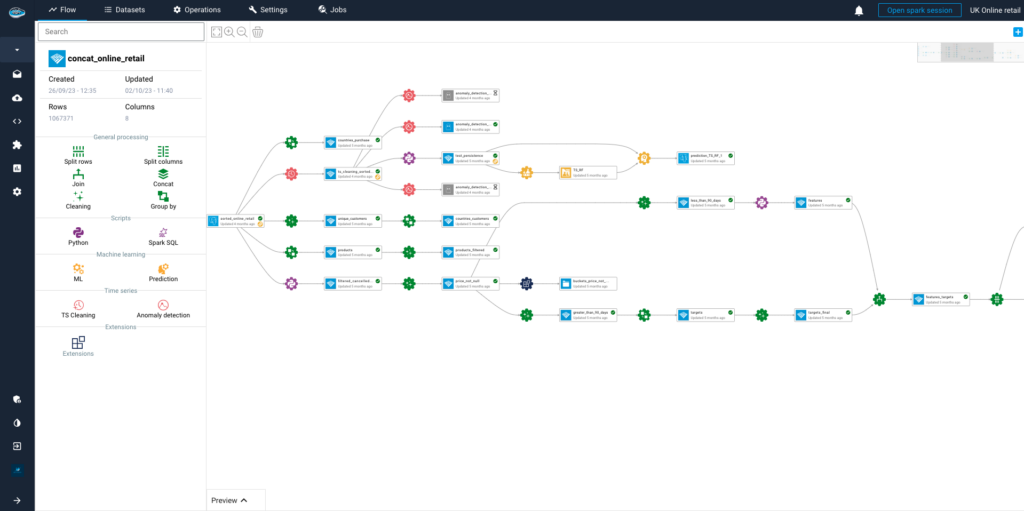
papAI 7 Flow

Here’s an in-depth look at the key features and advantages of our innovative solution:

Unified Data Integration Across Supply Chain Systems

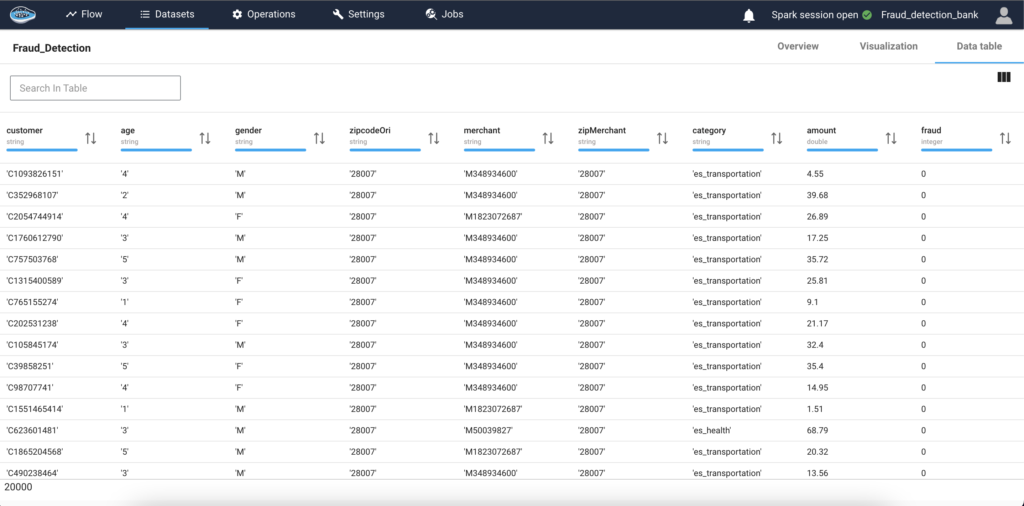
The capacity to combine data from several sources into a single, cohesive ecosystem is a fundamental component of any AI-first business. Data is frequently dispersed throughout big enterprises, existing in several departments, technologies, or cloud platforms. This fragmentation makes it harder to scale AI programs, slows down decision-making, and produces inconsistency. By offering smooth integration across all data sources, papAI solves this problem and guarantees that teams operate from a single source of truth.

Beyond just consolidating data, unified data integration allows for dependable and uniform analytics throughout the company. Teams may make quicker and better decisions by accessing real-time insights without having to reconcile contradicting facts. A single platform guarantees that all pertinent data is available, organized, and standardized, whether it be operational metrics, consumer behavior, market intelligence, or internal performance data. This eliminates silo-related bottlenecks and cuts down on the amount of time spent manually manipulating data.

data collection

Advanced Predictive & Prescriptive Modeling

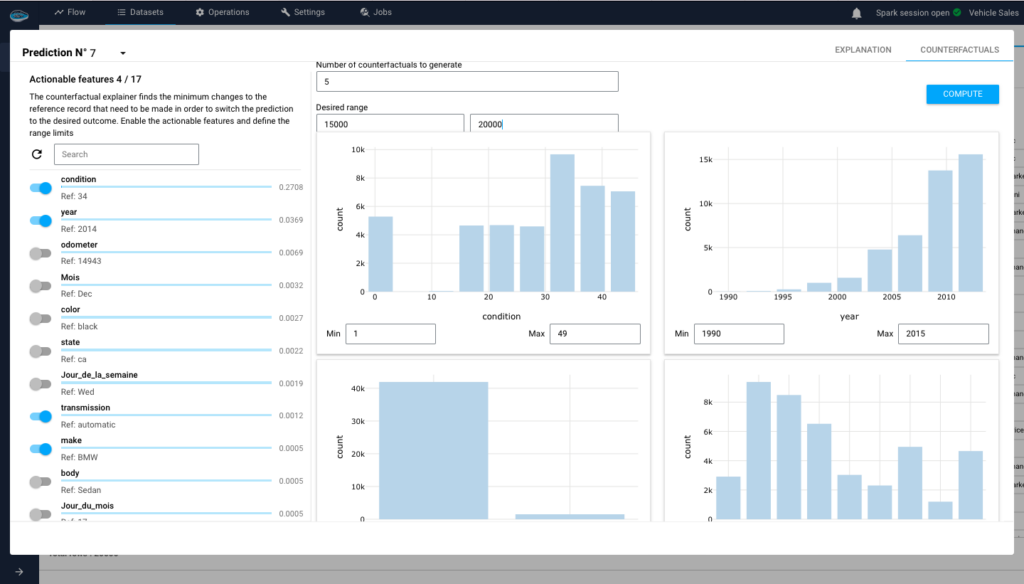
Understanding the past is only one aspect of AI’s actual capability; another is its ability to predict the future and maximize results. With papAI’s sophisticated predictive and prescriptive modeling, businesses can foresee trends, model scenarios, and make data-driven choices at scale. While prescriptive modeling goes one step further and suggests the best course of action to accomplish desired objectives, predictive modeling assists in identifying patterns and anticipating occurrences.

Businesses may respond proactively rather than reactively by utilizing these skills. Accurate, practical insights guide decisions about resource allocation, process optimization, risk mitigation, and strategic goals. Before making choices, teams may run “what-if” scenarios, which enables businesses to assess possible effects and maximize outcomes without incurring expensive trial and error. This guarantees that every choice is supported by facts and speeds up learning cycles.

Data prediction

Explainability & Traceability at Scale

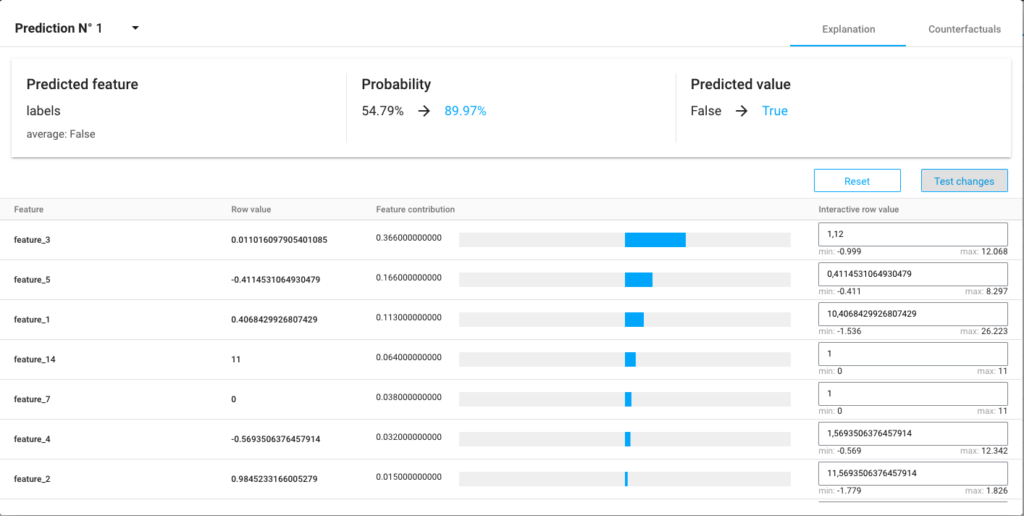
In today’s AI-driven businesses, trust is just as crucial as skill. In order to guarantee that every insight, suggestion, or automated action is visible, responsible, and verifiable, papAI places a strong emphasis on explainability and traceability at scale. While traceability guarantees that each choice can be linked to the underlying data, model logic, and process, explainability enables users to comprehend why a model generated a certain outcome.

Adoption throughout the whole organization depends on these skills. Leadership needs visibility to keep an eye on performance and uphold responsibility, and teams must have faith in AI to follow its suggestions. Additionally, explainability reduces risk, promotes moral decision-making, and facilitates adherence to changing legal requirements. Before taking action, businesses may use papAI to verify assumptions, examine model logic, and make sure results are trustworthy.

Interpretability and Explainability​

Build Your Own AI Solution and Unlock the Full Power of Your Data with Datategy

Unlocking the full potential of your data is more important than simply implementing technology when creating your own AI solution with Datategy. Organizations can automate complicated procedures, turn disjointed data into usable insights, and make choices quickly and confidently by utilizing Datategy’s platform. Datategy enables organizations to transition from reactive operations to proactive strategy through scalable automation, prescriptive recommendations, and predictive analytics.

Discover how a custom AI system can transform the way your teams sell, market, and grow. Schedule a demo today.

Consolidation reduces operational complexity, eliminates redundancies, and streamlines workflows. By unifying disparate tools into a single platform, organizations can accelerate experimentation, improve decision-making, and scale AI initiatives without adding more staff. Essentially, it turns fragmented systems into a high-efficiency, enterprise-grade ecosystem.

The process begins with auditing all existing tools to understand usage, overlap, and gaps. Next, organizations identify what to keep, replace, or merge into a unified platform. Finally, a structured adoption plan ensures teams can transition smoothly, embrace new workflows, and fully benefit from consolidation.

papAI stands out because it combines unified data integration, advanced predictive and prescriptive modeling, and enterprise-scale explainability and traceability. Unlike fragmented tools, it provides a single, coherent ecosystem where teams can collaborate, deploy AI at scale, and trust the insights they generate. It’s not just a tool—it’s a strategic engine for AI-first enterprises.

Explainability ensures that AI recommendations are transparent and understandable, while traceability tracks every step from data to decision. These features build trust, ensure accountability, and help enterprises meet regulatory or governance requirements, enabling AI to be confidently deployed across teams.

Interested in discovering papAI?

Our AI expert team is at your disposal for any questions

Why Should You Consolidate Your AI Tools for Faster Scaling?
Summary
Why Should You Consolidate Your AI Tools for Faster Scaling?
Article Name
Why Should You Consolidate Your AI Tools for Faster Scaling?
Description
Discover why consolidating your AI tools boosts speed, cuts costs, and unlocks faster, smarter scaling for your business.
Author
Publisher Name
Datategy
Publisher Logo
Scroll to top